Imagine standing in the abandoned ruins of a long-vanished empire, at the top of a mountain, somewhere in the Amazon, and snapping photos of an insect:
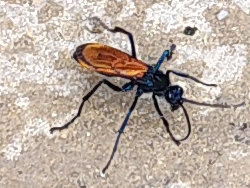
The image is quite grainy because I was standing far, far away. The tarantula hawk has beautiful orange wings, long hooked legs, a deep blue carapace, and flies at a leisurely, unhurried pace. The whole package is intensely sinister. It is of an insect order roughly 40 million years old.
Set aside insects for the moment. Consider that everyone comes to Lima, flies to Cusco, trains out to the Incan trail, hikes through the jungle, and at long last climbs to the Sun Gate to see Machu Picchu bathed in sunlight and wreathed in jungle mists.
But you could also just visit pre-Incan ruins in downtown Lima:
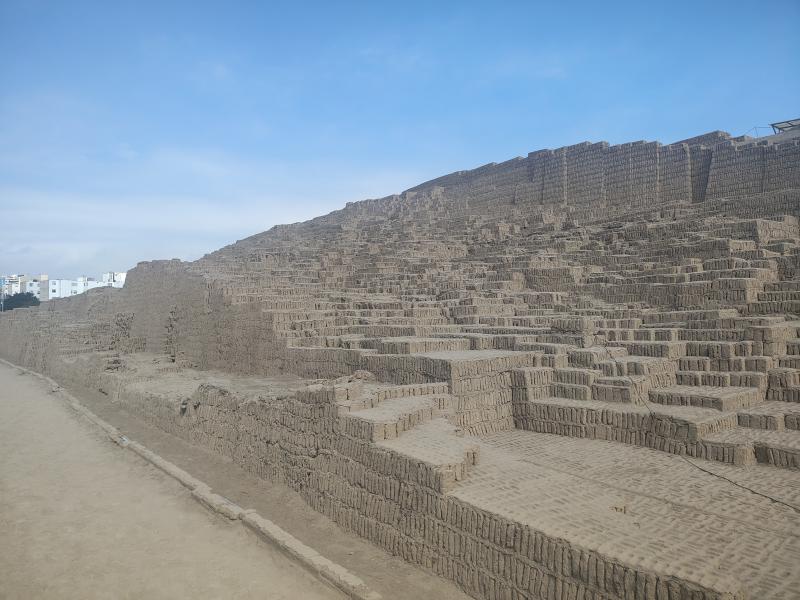
Here’s the kicker: This site was reused by another group after the first group and they also predate the Incans! Used as a motocross site until recently, it was 1000 years old when the Incan empire was having its day in the sun.
These all felt related, in Peru. The Incan empire, strangled in its crib. The pre-Incans who left a pyramid behind but not a name. The tarantula hawk, well, nothing hunts it, but it won’t escape the tarantula’s fate.
One axis of study for this year, for me, is “the long view”. Our present troubles seem so vast and insurmountable: acidifying oceans, a warming planet, xenophobia and corruption in our governments, exploitative and unsustainable wealth distributions across countries and within countries, the collapse of the belief in reason. It all seems so dire, so urgent. And it is - we each have only this little time to help or hinder. But it is also all going to be dust one day. Civilizations fail. The next civilization builds on the ruins on the old. The one after that uses it for motocross. Ours will be no different.