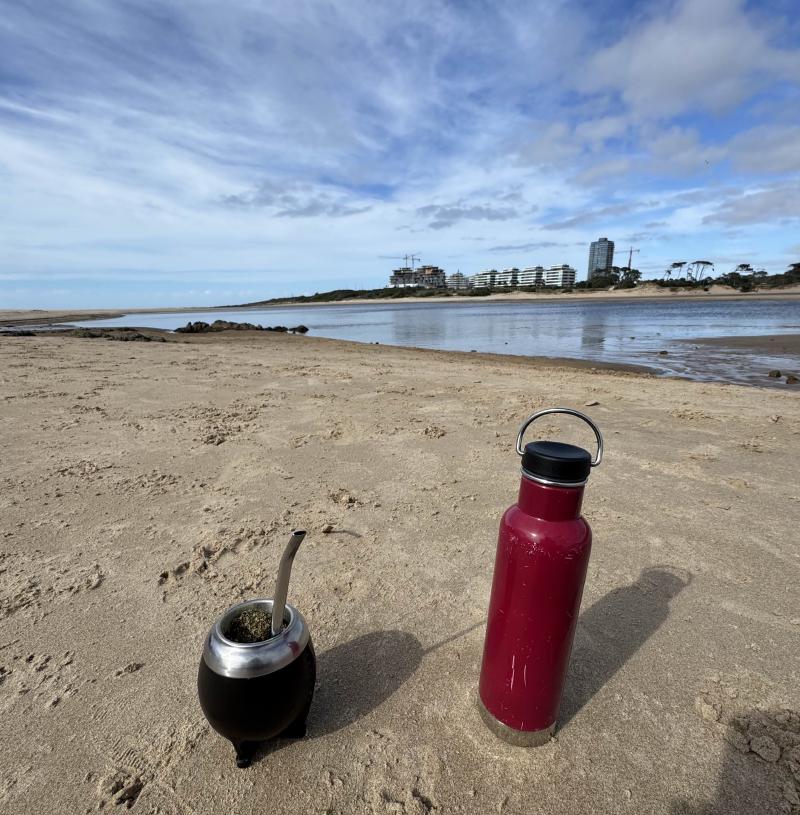
Sitting at the skate park, I daintily sip from my gourd, nodding knowingly to another parent across the park, who holds and slurps their own. Nothing makes me feel more a part of the Uruguayan fabric of life than drinking mate in public.
Mate (pronounced MAH-teh) is a traditional South American beverage made by steeping dried yerba mate leaves in hot water. Like tea or coffee, it contains caffeine, and it’s a daily habit for most Uruguayans.
My first taste of mate didn’t go well. On our first day here, we grabbed the supplies in our welcome basket, fired up the kettle, and poured hot water over the leaves. When I took my first sip through the metal straw, I got a stream of powdery sludge in my mouth, scalded my tongue, and puckered at the bitter taste.
After that false start, I thought it’d be best for my next cup of mate to be prepared by experts. Given its huge popularity, surely I would encounter it at one of La Barra’s cafes. But mate, I discovered, is not a drink you order casually. Unlike boba tea or espresso, mate is not served as a ready-made consumer experience. Uruguayans brew mate at home, using their preferred blend, their preferred gourd, and their preferred equipment. It is an intensely personal ritual.
To experience mate culture, I had to go all-in. I decided to make mate my default morning beverage. So long, sweet coffee! When Boundless Life staff held a workshop demonstrating the proper technique for preparing mate, I paid close attention. Over the course of multiple days, I patiently followed instructions for curing my traditional mate gourd, and conscientiously practiced my preparation technique.
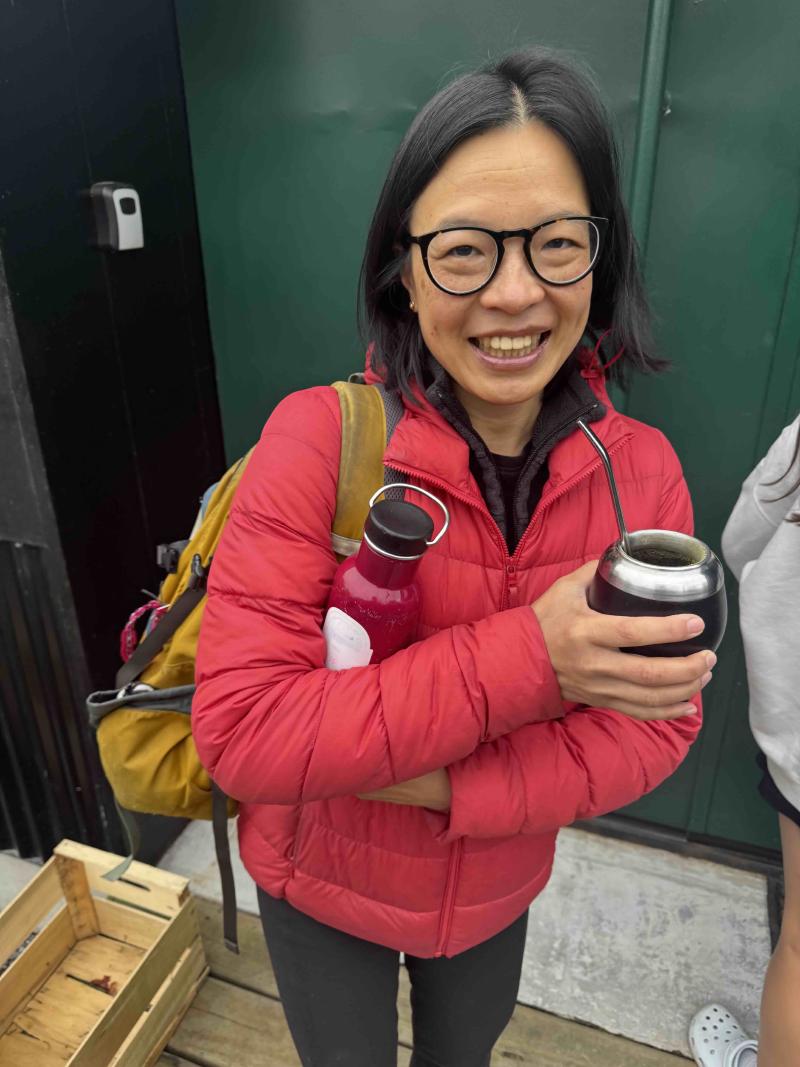
After more than a month, mate has become my habit too, at least for now. Every morning, I fill my gourd about two-thirds full of yerba mate, cover the top with my hand, and shake it so the fine powder rises to the top and doesn’t clog the straw. I add a splash of room-temperature water to let the leaves expand, then shape them into a “mountain” on one side of the gourd and wedge the bombilla (the metal straw) underneath. Only then do I add hot water, about 70-80°C, never boiling. Water that’s too hot burns the leaves and makes the mate bitter.
I savor the clean, grassy flavor and the soothing warmth of each sip. Mate doesn’t have the immediate appeal of a milky espresso drink, but it’s definitely growing on me. By the time I’ve had a few cupfuls, I start to feel a bright, gentle caffeine buzz.
When it’s time to leave the house, I grab my thermos and gourd, just like everyone else. There is one tradition I haven’t adopted yet: mate is famously passed around and shared with friends. As a germ-conscious, post-Covid-19 parent, I keep my straw to myself. Still, when I catch another parent’s eye across the skate park, it feels like we’re sharing a tradition.